
Importance of Influencers in 2026: Instagram, TikTok & YouTube
Importance of Influencers in 2026: Instagram, TikTok & YouTube
Social media has transformed the way people discover products, follow trends, learn new skills, and make purchasing decisions. Instead of relying only on traditional advertising, businesses can now communicate with potential customers through creators who have already built communities around specific interests. This is one of the key reasons behind the growing Importance of influencers in 2026.
An influencer can be a content creator, industry expert, educator, entertainer, reviewer, or specialist who has developed an audience on platforms such as Instagram, TikTok, or YouTube. For businesses, the value of an influencer is not simply the number of followers they have. Audience relevance, engagement, content quality, credibility, niche, and brand alignment can all influence whether a collaboration makes sense.
From an Instagram influencer creating visual lifestyle content to a TikTok influencer producing short-form videos or a YouTube influencer publishing detailed reviews and tutorials, each platform provides businesses with different ways to reach potential customers.
What Is an Influencer?
An influencer is someone who has built an audience and can influence awareness, opinions, interests, or purchasing decisions through their content and relationship with followers.
Influencers can operate in almost any niche, including fashion, beauty, fitness, technology, gaming, travel, food, business, finance, education, health and wellness, lifestyle, photography, and entertainment.
Influencers are also commonly grouped according to audience size, such as nano, micro, mid-tier, macro, and larger creators. Exact follower thresholds can vary depending on the platform and the organization defining them.
A smaller creator should not automatically be considered less valuable. For some campaigns, a highly relevant micro-influencer with an engaged niche audience may be more suitable than a creator with a much larger but broader following.
Why Are Influencers Important for Businesses?
One of the main reasons behind the Importance of Influencers in 2026 is their ability to connect brands with established online communities.
Building an audience from zero can take considerable time. Influencers have already spent time creating content, interacting with followers, and developing a recognizable presence.
Businesses can collaborate with relevant creators to introduce products or services to audiences that may match their target customers.
Influencer marketing can potentially support brand awareness, product discovery, social proof, content creation, audience engagement, product launches, website traffic, promotions, brand collaborations, and customer acquisition.
However, results are not automatic. Selecting influencers based only on follower count can lead to poor targeting. The creator’s audience, niche, engagement, content style, location, and relevance to the brand should also be considered.
Importance of Instagram Influencers
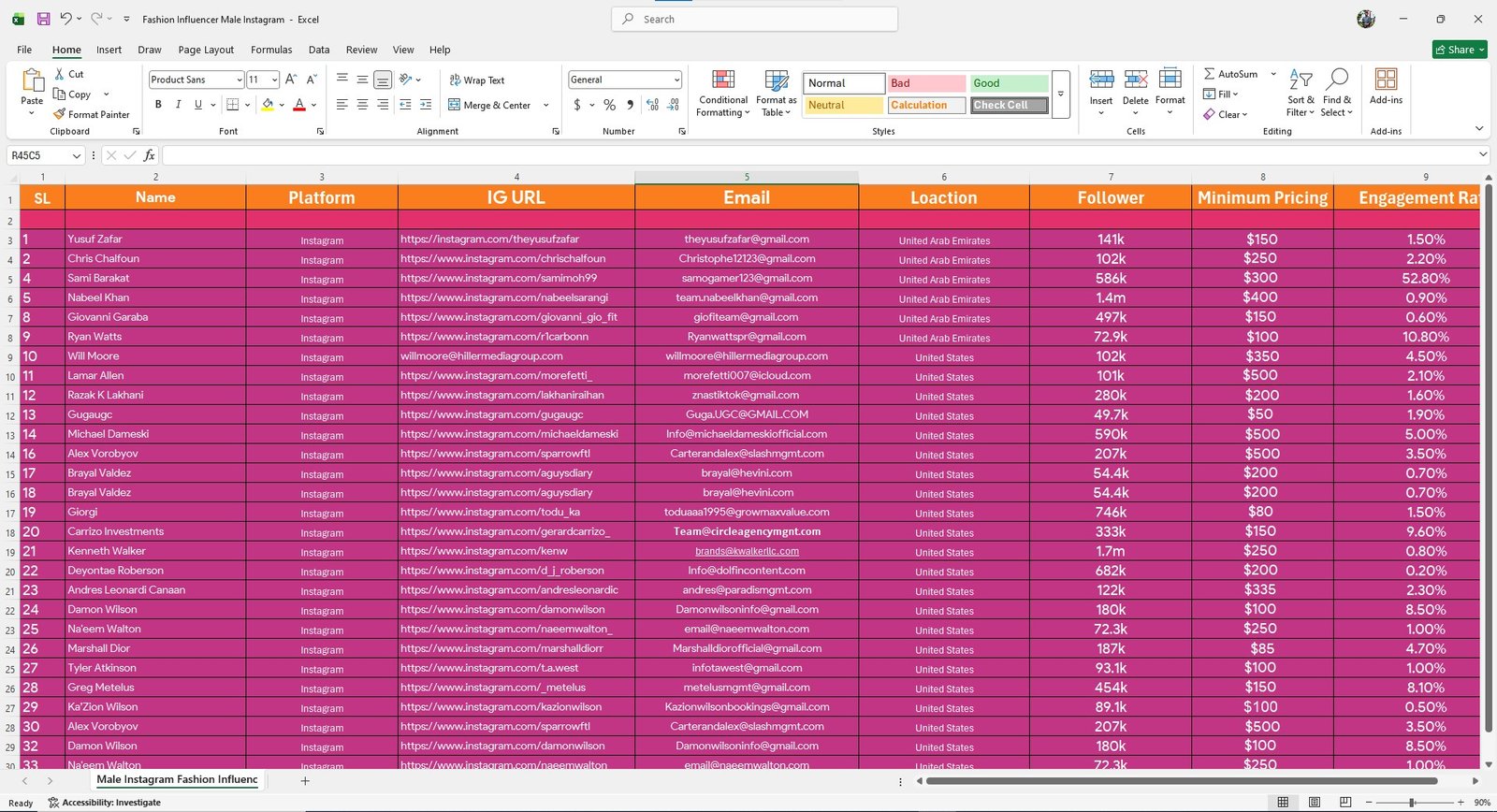
Instagram remains an important platform for visual content and creator-led brand communication. An Instagram influencer can use photos, Reels, Stories, carousels, and other formats to introduce products or services to followers.
For brands in visually driven industries such as fashion, beauty, food, travel, fitness, lifestyle, design, and consumer products, Instagram can provide particularly useful opportunities.
Why Instagram Influencers Matter
Instagram allows brands to present products within visual and lifestyle-oriented content rather than relying entirely on conventional advertisements.
A creator might demonstrate a product, share a personal experience, publish a tutorial, create a Reel, or show how the product fits into everyday life.
This type of collaboration can make brand communication feel different from a standard advertisement because the content appears within the creator’s established style.
When researching an Instagram influencer, businesses should consider more than follower count. Useful factors may include content niche, audience relevance, location, engagement, posting consistency, content quality, previous collaborations, brand compatibility, and public contact information.
Finding creators whose audience overlaps with the brand’s ideal customers is generally more meaningful than simply building a list of the largest accounts.
Instagram Micro Influencers
Micro-influencers can be useful when a brand wants to reach a more specific community.
For example, a local fitness company may receive more relevant exposure from several fitness-focused creators within its target market than from a large general entertainment account.
This is why influencer research should begin with campaign requirements rather than follower numbers.
The first question should be, “Who is the brand trying to reach?”
The next should be: Which creators already communicate with that audience?
Importance of TikTok Influencers
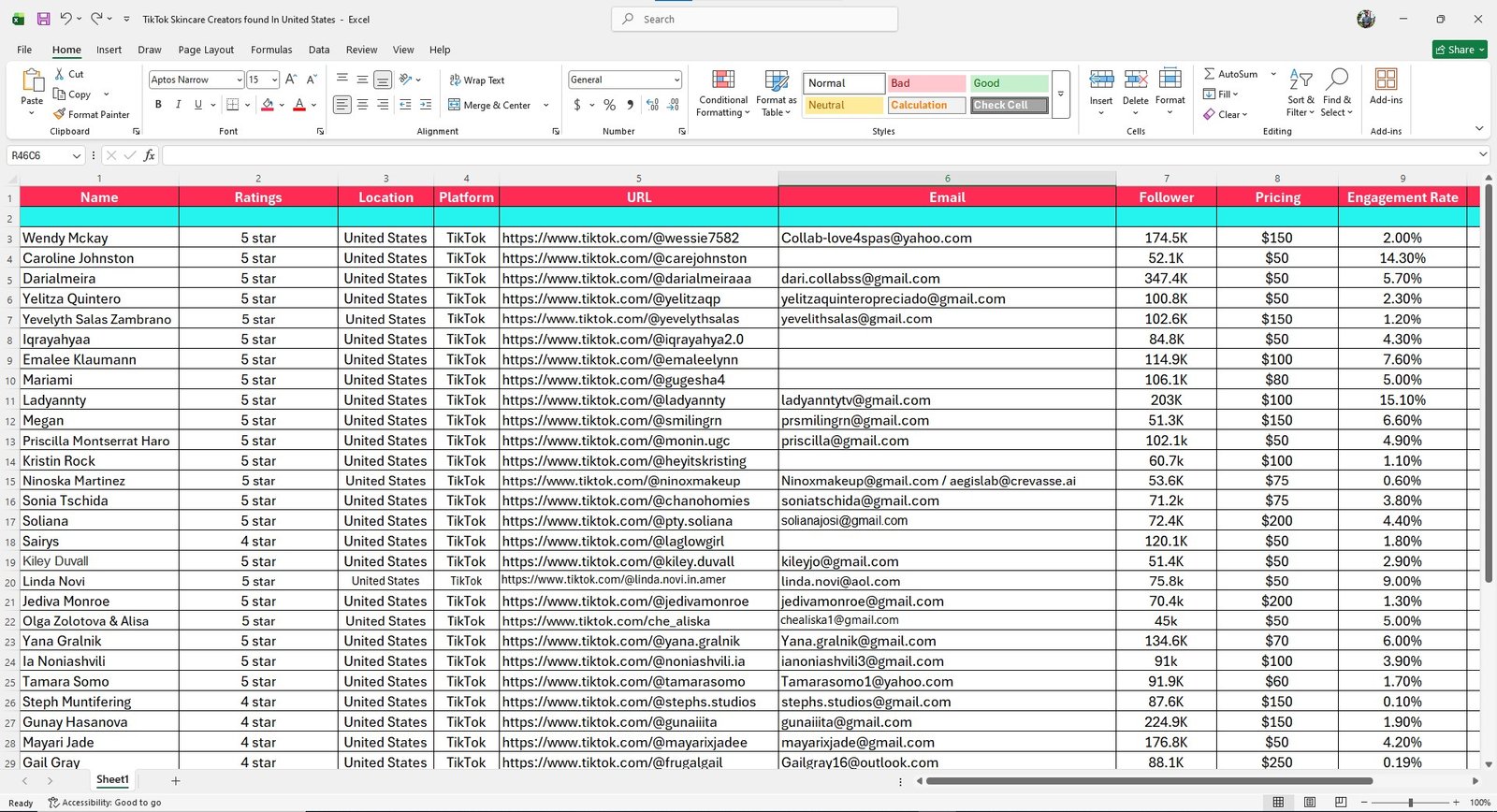
TikTok has created a creator ecosystem centered heavily around short-form video, entertainment, education, trends, demonstrations, and community-driven content.
A TikTok influencer can help a brand present products or ideas through videos designed for the platform’s content style.
The high search interest around TikTok influencer-related terms also reflects how much attention businesses and marketers give to creator discovery on the platform.
Why TikTok Influencers Matter
TikTok content can communicate an idea quickly.
Creators can demonstrate products, explain features, participate in trends, share experiences, create tutorials, or develop entertaining content around a brand.
For businesses targeting audiences active on TikTok, relevant creators can provide another way to introduce a product or service.
A successful collaboration still requires appropriate targeting. Brands researching a TikTok influencer should consider factors such as niche, audience, content format, engagement, geographic relevance, posting activity, video quality, brand suitability, and previous partnerships.
A creator with a large following is not necessarily the best choice if their audience does not match the campaign.
TikTok Micro Influencers
TikTok micro-influencers can be particularly interesting for niche campaigns because their content may focus on a clearly defined community or subject.
For example, TikTok fitness influencers may be relevant to businesses selling fitness apparel, gym services, equipment, wellness products, or related solutions.
A beauty company would need a different creator profile. A technology business might instead look for creators producing gadget reviews, software content, tutorials, or technology news.
The target should always determine the influencer.
TikTok Brand Deals
TikTok brand deals can take different forms depending on the campaign and creator.
A collaboration might involve sponsored content, product demonstrations, reviews, tutorials, product placement, affiliate relationships, or other agreed promotional arrangements.
Before approaching creators, businesses should establish campaign objectives, audience requirements, preferred creator type, budget considerations, and expected deliverables.
This makes influencer discovery more focused.
Importance of YouTube Influencers
YouTube provides a different creator environment from short-form platforms.
A YouTube influencer can produce longer videos that allow more time for explanations, reviews, demonstrations, comparisons, tutorials, and storytelling.
This can be valuable when a product or service requires more context before someone understands its benefits.
Why YouTube Influencers Matter
YouTube content can continue to be discovered through search, recommendations, creator channels, and related videos after publication.
Depending on the niche, creators can produce content such as product reviews, tutorials, comparisons, demonstrations, unboxing videos, educational videos, industry discussions, and sponsored integrations.
For example, someone considering a software product may watch a detailed tutorial before making a decision. A customer researching technology may watch multiple product comparisons. A beauty customer may search for demonstrations or reviews.
This makes YouTube influencer marketing particularly relevant for businesses whose products benefit from deeper explanation.
Finding YouTube Influencers
Businesses looking to find YouTube influencers should evaluate creators according to the campaign rather than selecting them only because they have a large subscriber count.
Research can include channel niche, subscriber audience, recent views, content relevance, video quality, upload consistency, engagement, geographic focus, previous brand collaborations, and available business contact details.
A properly researched YouTube influencer list should therefore contain creators who meet defined campaign requirements rather than random popular channels.
Instagram vs TikTok vs YouTube Influencers
There is no single platform that is automatically appropriate for every influencer campaign.
Instagram is highly visual and supports Reels, Stories, photos, and lifestyle-oriented content.
TikTok focuses heavily on short-form video, trends, entertainment, discovery, and fast-moving creator content.
YouTube supports both short and long-form video and can be particularly useful for detailed reviews, demonstrations, education, and tutorials.
Instead of asking, “Which platform is best?” businesses can ask, “Where does our target audience spend time, and which content format is appropriate for our product?”
Some campaigns may use one platform, while others may benefit from a combination of Instagram, TikTok, and YouTube creators.
Why Micro Influencers Matter
Large follower counts often attract attention, but follower count alone does not determine campaign relevance.
Micro influencers may serve smaller or more specialized communities. Depending on the campaign, this can make them useful for brands seeking specific audiences.
For example, a business may prefer several niche creators rather than one broad creator if those smaller audiences closely match the ideal customer.
Businesses evaluating micro influencers should still review audience relevance, content quality, engagement, location, brand compatibility, and authenticity.
The Importance of Influencers in 2026 is therefore increasingly connected to relevance and audience fit rather than simply popularity.
What Is Influencer Marketing?
Influencer marketing is a strategy in which businesses collaborate with creators to communicate products, services, campaigns, or brand messages to the creator’s audience.
A typical process might look like:
Define Campaign → Identify Audience → Find Influencers → Research & Qualify → Collect Contact Information → Outreach → Negotiate → Collaborate → Measure Results
This process shows why influencer discovery is an important part of a campaign.
Before a brand can contact creators, it needs to know who those creators are.
How to Find the Right Influencers
Finding relevant influencers requires research.
A company should begin by clearly defining its target audience, platform, niche, location, preferred follower range, content style, campaign objective, budget, engagement expectations, and brand requirements.
Once these criteria are established, influencer research becomes much more targeted.
For example, instead of requesting “Find 500 TikTok influencers,” a more useful requirement could be:
“Find US-based TikTok fitness creators with relevant fitness content, active accounts, an appropriate follower range, and available business contact information.”
The second request produces a much clearer research target.
What Is Influencer Lead Generation?
Influencer lead generation is the process of identifying creators who match specific campaign requirements and organizing useful information so businesses can evaluate and contact them.
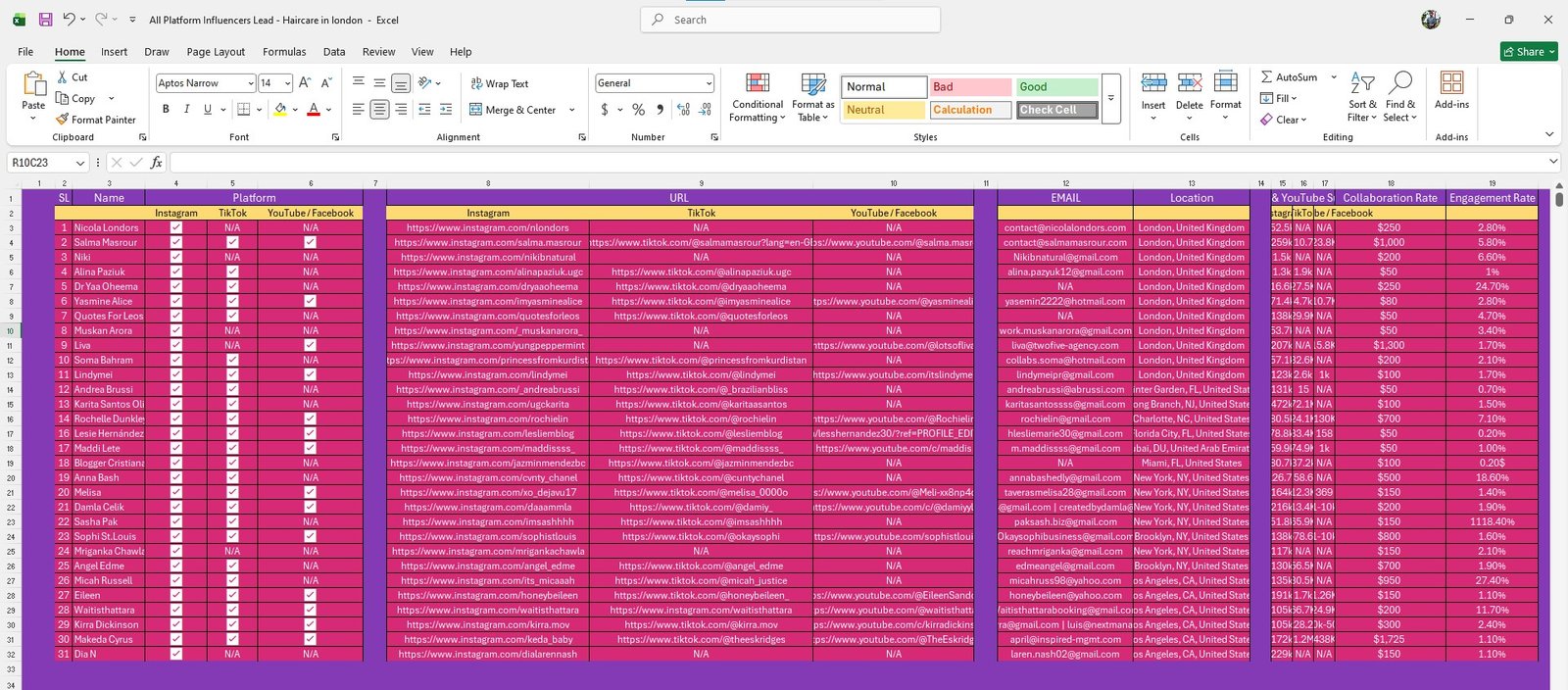
Depending on the project, an influencer lead list may contain influencer name, profile URL, platform, niche, location, followers or subscribers, engagement information, email address, website, other available contact details, and qualification notes.
Businesses may need lists of Instagram influencers, TikTok influencers, or YouTube influencers for outreach and potential collaborations.
The objective is not simply to collect thousands of profiles. It is to identify creators who actually match the brand’s campaign requirements.
Why Accurate Influencer Research Matters
Poor influencer research can waste both time and marketing resources.
A list may contain creators with impressive follower numbers but still be unsuitable because of the wrong niche, location, audience, content style, or contact information.
Professional research should therefore focus on relevance and data quality.
Before adding a creator to a prospect list, researchers may need to determine whether the account is active, whether its content matches the required niche, whether the creator fits the target location, and whether useful business contact information is publicly available or otherwise appropriately sourced.
This creates a more actionable influencer database.
Influencer Marketing for Different Industries
Influencer marketing is used across many industries, but the appropriate creator profile changes depending on the product.
A fashion brand may search for Instagram fashion creators. A fitness company may research TikTok fitness influencers. A technology business may prefer YouTube reviewers. A restaurant may work with local food creators. A travel company may target travel influencers across Instagram, TikTok, and YouTube.
A beauty company may collaborate with creators who publish makeup tutorials and product reviews.
This reinforces an important principle: The right influencer depends on the right audience.
How Influencers Can Support Brand Awareness
Influencers can introduce businesses to audiences that may not already know the brand.
Instead of the company being the only voice communicating its product, a creator can present the product through their own content style.
This can provide additional exposure and help brands appear in conversations happening within relevant online communities.
However, businesses should set realistic objectives.
Influencer marketing does not guarantee sales simply because a creator publishes content. Campaign results can depend on audience fit, offer quality, creator selection, creative execution, pricing, timing, and many other factors.
Influencer Lead Generation Demand on Fiverr and Upwork
The growth of influencer marketing has also created freelance opportunities around influencer research and influencer lead generation. Businesses can use platforms such as Fiverr and Upwork to find freelancers who research Instagram, TikTok, and YouTube creators for potential campaigns.
Clients may request targeted Instagram influencer lists, TikTok influencer lists, or YouTube influencer lists based on niche, location, follower range, engagement, and other criteria. Projects may also require profile URLs, publicly available business emails, follower data, and organized spreadsheets.
For freelancers providing these services, accurate targeting and clean data are particularly important. A carefully researched list of relevant creators can be more useful to a client than a much larger list of unrelated profiles.
Frequently Asked Questions About Influencers
Why are influencers important for brands?
Influencers can help brands communicate with established audiences through creator-led content. Depending on the campaign, this can support awareness, product discovery, engagement, content creation, and customer acquisition efforts.
What is an Instagram influencer?
An Instagram influencer is a creator who has developed an audience on Instagram and publishes content such as Reels, Stories, photos, or carousels around particular interests or niches.
What is a TikTok influencer?
A TikTok influencer is a creator who has built an audience through TikTok content. Businesses may collaborate with relevant creators for product demonstrations, sponsored videos, brand awareness, or other campaigns.
What is a YouTube influencer?
A YouTube influencer is a creator with an established audience on YouTube. Their content may include reviews, tutorials, demonstrations, entertainment, education, comparisons, or other video formats.
How can brands find TikTok influencers?
Brands can research creators using niche, location, follower range, content relevance, engagement, audience fit, and other campaign requirements. A targeted research process is usually more useful than simply choosing the largest accounts.
How can businesses find YouTube influencers?
Businesses can search relevant YouTube niches and evaluate channels based on their content, audience, recent performance, geographic relevance, brand compatibility, and available contact information.
Are micro influencers useful?
They can be. Micro influencers may have smaller but more specialized audiences. Their usefulness depends on campaign objectives, audience relevance, content quality, engagement, and brand fit.
Which is better: Instagram, TikTok, or YouTube?
There is no universal answer. Instagram may suit highly visual campaigns, TikTok can be useful for short-form creator content, and YouTube can support deeper reviews and demonstrations. The appropriate platform depends on the audience, product, content format, and campaign objectives.
Importance of Fiverr and Upwork for Influencer Research Services
Freelance marketplaces like Fiverr and Upwork are important platforms for businesses looking for professionals who can support influencer research and influencer lead generation. Brands, agencies, and marketing teams can hire freelancers to find targeted Instagram influencers, TikTok influencers, and YouTube influencers based on specific niches, locations, follower ranges, engagement levels, and campaign requirements.
These marketplaces also create opportunities for freelancers who specialize in building accurate influencer lists, researching creator profiles, finding available business contact information, and organizing data for brand outreach. As influencer marketing continues to play an important role in digital campaigns, Fiverr and Upwork provide a practical connection between businesses that need targeted influencer research and freelancers who can deliver organized, campaign-ready influencer data.
Final Thoughts
Influencers have become an important part of how brands communicate with audiences across social media. Instagram provides strong visual and lifestyle-focused opportunities, TikTok supports short-form creator content and discovery, while YouTube enables detailed reviews, tutorials, demonstrations, and long-form communication.
For businesses, successful influencer marketing starts with identifying the right audience and then finding creators who genuinely match that audience. Follower count alone is not enough; niche, location, engagement, content quality, brand alignment, and creator relevance should all be considered.
Ultimately, the Importance of Influencers in 2026 comes from their ability to connect businesses with established online communities through relevant content and trusted creator relationships. By combining professional influencer research, careful qualification, targeted outreach, and the right mix of Instagram influencers, TikTok influencers, and YouTube influencers, businesses can build more focused influencer marketing campaigns and create new opportunities for brand awareness, engagement, and growth.