

Importance of Lead Generation in 2026: Complete Guide
Importance of Lead Generation in 2026: Complete Guide
Every business needs customers to survive and grow, but customers rarely appear without a clear strategy for attracting them. This is where lead generation becomes essential. Whether you run a startup, B2B company, agency, local business, or professional service, building a consistent pipeline of potential customers can directly support your sales and long-term growth.
Importance of Lead Generation in 2026: Complete Guide goes far beyond collecting names, phone numbers, or email addresses. Effective lead generation helps a business identify people or companies that may genuinely need its products or services, understand those prospects, start relevant conversations, and eventually convert qualified opportunities into customers.
In the article “Importance of Lead Generation in 2026: Complete Guide,” businesses can generate leads through websites, search engines, LinkedIn, social media, email outreach, content marketing, Google Maps, paid advertising, referrals, and specialized lead generation services. However, successful lead generation is not simply about collecting as many contacts as possible. The real objective is to find the right prospects and connect them with the right offer at the right time.
What Is Lead Generation?
Lead generation is the process of identifying and attracting potential customers who may be interested in a company’s products or services.
A lead might be an individual consumer, business owner, executive, manager, purchasing decision-maker, or another relevant contact depending on the business model.
For example, a B2B software company may target CEOs, CTOs, operations managers, or IT directors at companies that match its ideal customer profile. A local service business may instead focus on people within a specific geographic area who need its services.
A complete lead generation process may include:
- Defining the ideal customer profile
- Identifying target industries and locations
- Finding relevant companies
- Identifying decision-makers
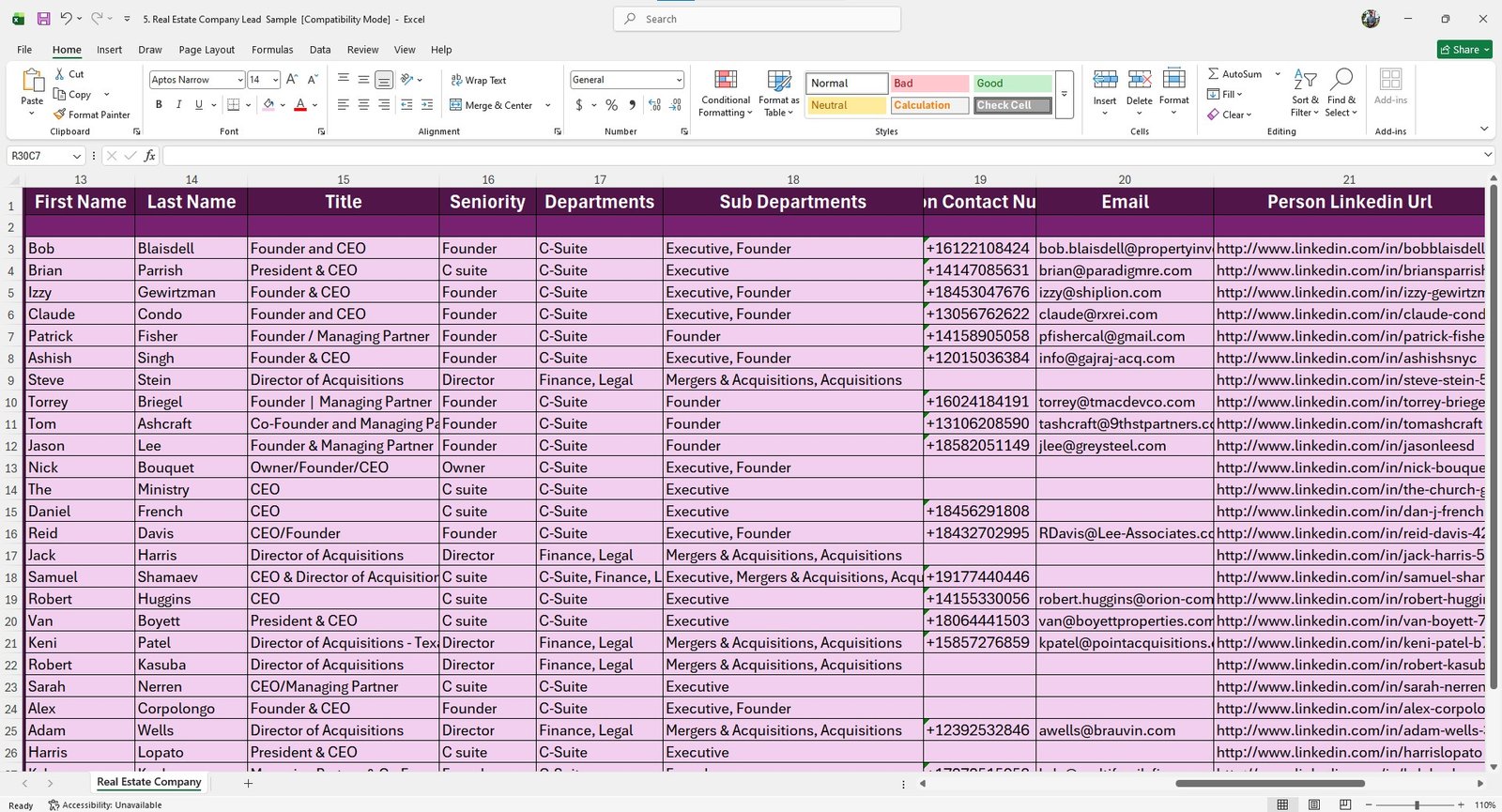
- Collecting business contact information
- Verifying available data
- Qualifying prospects
- Starting outreach or nurturing
- Tracking responses
- Moving qualified leads into the sales process
This makes lead generation an important connection between marketing and sales.
Why Is Lead Generation Important?
Importance of Lead Generation in 2026: Complete Guide is that it creates opportunities for businesses to reach potential customers instead of waiting for customers to discover them by chance.
Without a reliable source of leads, a sales team can quickly run out of people to contact. Marketing campaigns may generate attention, but that attention needs to become identifiable opportunities before it can contribute to revenue.
An effective lead generation system can help a business build a predictable pipeline, identify potential buyers, improve targeting, support sales teams, enter new markets, and create more opportunities for customer acquisition.
For many businesses, growth becomes difficult when prospecting is inconsistent. A structured lead generation strategy helps solve this problem by making customer acquisition an ongoing process.
1. Lead Generation Creates a Consistent Sales Pipeline
One of the biggest advantages of lead generation is its ability to feed potential opportunities into a sales pipeline continuously.
Imagine a business closes several projects this month but has no new prospects waiting for next month. Revenue can quickly become unpredictable.
A consistent lead gen process prevents the business from relying entirely on referrals, repeat customers, or occasional inquiries. New prospects can continuously enter the pipeline while existing prospects move through qualification, follow-up, negotiation, and closing.
Importance of Lead Generation in 2026: Complete Guide. This matters especially for businesses with longer sales cycles because today’s prospect may become a customer weeks or months later.
2. Lead Generation Helps Businesses Find the Right Customers
Importance of Lead Generation in 2026: Complete Guide. More leads do not automatically mean better results.
A database containing thousands of irrelevant contacts may be less valuable than a carefully researched list of 100 prospects who closely match a company’s ideal customer profile.
Effective lead generation focuses on relevance.
Businesses can qualify prospects using criteria such as
- Industry
- Company size
- Geographic location
- Job title
- Decision-making authority
- Business type
- Customer needs
- Revenue or growth stage
- Technology used
- Relevant business challenges
Importance of Lead Generation in 2026: Complete Guide. This approach can help sales teams spend more time communicating with prospects who have a realistic reason to consider their offer.
3. B2B Lead Generation Connects Companies With Decision-Makers
B2B lead generation matters because business purchasing decisions often involve specific decision-makers.
Finding a company is only the beginning. A salesperson may also need to identify the appropriate founder, CEO, marketing director, operations manager, sales leader, procurement professional, or another relevant contact.
This is why high-quality B2B leads often include more than a company name.
Useful prospect data may include the company name, website, industry, location, company size, decision-maker name, job title, professional profile, business email, phone number, and qualification notes.
Importance of Lead Generation in 2026: Complete Guide. A structured B2B lead generation process helps sales teams move from asking, “Which companies should we target?” to knowing, “Which person at this company should we contact, and why?”
4. Lead Generation Supports Business Growth
Businesses need new opportunities to grow beyond their existing customer base.
Lead generation can help companies explore new industries, locations, customer segments, and markets.
For example, a company currently serving small businesses may research opportunities among mid-sized companies. A local agency may explore prospects in another city or state. A B2B service provider may identify industries where its solution solves a particularly important problem.
Lead generation therefore supports both customer acquisition and market expansion.
The process also produces useful information. As businesses communicate with more prospects, they can learn which industries respond, which offers generate interest, which decision-makers engage, and which customer segments are less suitable.
Importance of Lead Generation in 2026: Complete Guide. These insights can improve future targeting.
5. Lead Generation Makes Sales Prospecting More Efficient
Sales representatives should spend their time communicating with relevant prospects rather than searching randomly for people to contact.
A well-organized prospect database can make sales prospecting and lead generation more efficient by giving sales teams structured information before outreach begins.
Instead of contacting random businesses, a salesperson can work from a qualified list based on specific criteria.
For example:
Target Industry: Digital Marketing Agencies
Location: United States
Company Size: 11–50 employees
Decision-Maker: Founder, CEO, Head of Sales, or Growth Director
The resulting prospect list is far more actionable than a generic database of companies.
Importance of Lead Generation in 2026: Complete Guide: This targeted approach saves research time and makes outreach more relevant.
6. Lead Generation Supports Personalized Outreach
Modern prospects receive many generic sales messages.
A targeted lead list gives businesses the information they need to personalize communication.
Instead of sending:
“Hi, we provide marketing services. Are you interested?”
A business can reference the prospect’s company, role, industry, location, potential needs, or another relevant observation.
Personalization does not mean writing an entirely different campaign for every contact. It means having enough accurate information to make communication relevant.
Importance of Lead Generation in 2026: High-quality lead generation that creates the data foundation needed for this approach.
7. Lead Generation Helps Marketing and Sales Work Together
Marketing and sales should not operate as completely separate functions.
Marketing attracts attention and creates demand. Lead generation helps identify potential opportunities. Sales further those opportunities and tries to convert them into customers.
When these activities align, businesses can build a clearer customer acquisition system.
For example:
Marketing → Lead Generation → Qualification → Outreach → Follow-Up → Sales Conversation → Customer
Importance of Lead Generation in 2026: Complete Guide. This process gives businesses a framework for understanding how someone moves from discovering the company to becoming a potential customer.
8. Inbound and Outbound Lead Generation Create Different Opportunities
Businesses can use two broad approaches to generate leads: inbound and outbound. Importance of Lead Generation in 2026: Complete Guide.
Inbound Lead Generation
Inbound lead generation attracts prospects toward a business.
Common methods include:
- Search engine optimization
- Blog content
- Social media
- Landing pages
- Lead magnets
- Email subscriptions
- Webinars
- Organic search
- Paid advertising
For example, someone searching Google for information about a business problem may find a useful article, visit the company’s website, and submit an inquiry.
Outbound Lead Generation
Outbound lead generation involves proactively identifying and contacting potential customers.
Common methods include:
- Cold email
- LinkedIn prospecting
- Cold calling
- Direct outreach
- Account research
- Targeted prospect lists
A strong outbound lead generation process starts with accurate targeting. Sending thousands of messages to irrelevant people is no substitute for proper research.
Importance of Lead Generation in 2026: Complete Guide. Many businesses use both inbound and outbound strategies instead of relying on a single channel.
9. LinkedIn Lead Generation Can Be Valuable for B2B Companies
LinkedIn lead generation has become an important B2B prospecting method because LinkedIn provides professional information about companies and the people who work there.
Businesses can research prospects using factors such as job title, company, industry, location, professional background, and company size.
This is especially useful for identifying decision-makers.
However, finding LinkedIn leads is only one part of the process. Prospects should still be qualified according to the company’s ideal customer profile before outreach begins.
The is n’t to connect with everyone. The Goal is to identify relevant professionals with a logical connection to the product or service being offered.
Importance of Lead Generation in 2026: Complete Guide
10. Lead Generation Helps Businesses Build Better Customer Data
A structured lead generation system gradually creates a valuable database of prospects and market information.
Businesses can organize leads according to industry, location, company size, job role, lead source, qualification level, outreach status, and other useful attributes.
Over time, this information can reveal patterns.
For example, a business may discover that:
- One industry responds more frequently than another.
- Companies of a particular size convert better.
- Certain job titles are more appropriate decision-makers.
- LinkedIn produces stronger prospects for one campaign.
- Search traffic performs better for another.
- Specific offers receive more responses.
These insights can improve future marketing and sales decisions.Importance of Lead Generation in 2026: Complete Guide
11. Quality Leads Are More Important Than Large Lead Lists
One of the most common mistakes in lead generation is focusing entirely on quantity.
A company may ask for 10,000 leads when it would receive more value from 500 properly targeted prospects.
A quality lead should match relevant targeting criteria and contain useful, reasonably accurate information.
For B2B campaigns, this may involve checking:
- Is the company in the correct industry?
- Is it located in the target market?
- Does its size match the ideal customer profile?
- Is the contact actually a decision-maker?
- Is the professional information current?
- Is the available email appropriate for outreach?
- Has duplicate data been removed?
The objective should be to create actionable sales opportunities rather than simply increase spreadsheet size.Importance of Lead Generation in 2026: Complete Guide
12. Lead Generation Services Can Save Research Time
Importance of Lead Generation in 2026: Complete Guide. Businesses can generate leads internally or use professional lead generation services.
Internal research gives companies direct control over prospecting, but it also requires time, tools, data research, verification, organization, and ongoing management.
External lead generation services may help businesses that want prospect research completed before their sales team begins outreach.
Depending on the project, a professional lead generation service may handle target research, company identification, decision-maker research, contact collection, data organization, duplicate removal, and qualification.
The appropriate approach depends on the company’s budget, team, sales process, and required volume.
13. Lead Generation Can Support Small Businesses
Lead generation is not limited to large companies.
Small businesses often need it even more because they may not have large marketing budgets or established brand recognition.
A focused campaign can help a small business identify a specific customer segment instead of trying to market to everyone.
For example, a small B2B service provider could target 100 highly relevant businesses each month, research the appropriate decision-makers, and create personalized outreach around their needs.
This provides a practical answer to a common question: How do I get leads for my business?
Start by defining exactly who your ideal customer is. Then identify where those customers can be found, determine who makes purchasing decisions, collect relevant prospect information, qualify the leads, and build a consistent outreach and follow-up process.
14. Lead Generation Supports Long-Term Customer Acquisition
Lead generation should not be treated as a one-time project.
Not every prospect is ready to purchase immediately.
Some leads may need:
- Multiple follow-ups
- Additional information
- A sample
- A proposal
- A consultation
- More time
- Internal approval
- Budget availability
For this reason, businesses should think beyond the initial contact.
A prospect who says “not right now” may still become a customer later.
Lead nurturing, follow-up, CRM organization, and relationship building are therefore important parts of a complete lead generation strategy.
What Makes a Good Lead Generation Strategy?
An effective strategy usually starts with a clear understanding of the target customer.
Before collecting leads, answer these questions:
Who are you targeting?
Define the industry, location, company size, customer type, and other relevant characteristics.
Who is the decision-maker?
Determine which roles normally influence or approve purchasing decisions.
What problem are you solving?
Your offer should address a real customer need.
Where can prospects be found?
This may include Google, LinkedIn, business directories, Google Maps, industry databases, social media, or your own website.
How will you qualify leads?
Establish criteria before beginning research.
How will you contact them?
Choose appropriate outreach channels.
How will you follow up?
Create a process instead of sending one message and stopping.
A clear system makes lead generation easier to measure and improve.
Common Lead Generation Mistakes to Avoid
Businesses can collect large numbers of contacts and still produce poor results if the strategy is weak.
Common mistakes include targeting everyone, using outdated information, contacting the wrong decision-makers, buying low-quality databases, ignoring email verification, sending generic outreach, failing to remove duplicates, prioritizing quantity over relevance, and not following up.
Another mistake is expecting lead generation itself to guarantee sales.
A lead is an opportunity—not a customer.
Importance of Lead Generation in 2026: Complete Guide. The quality of the offer, pricing, positioning, outreach, sales conversation, trust, timing, and follow-up all influence whether a prospect eventually converts.
How Lead Generation Fits Into a Complete Sales System
Lead generation works best as part of a larger customer acquisition process.
A practical system may look like this:
Target → Find → Qualify → Contact → Follow Up → Close → Deliver → Build Repeat Business
First, define the target market.
Next, find companies or individuals that match the criteria.
Then qualify those prospects and identify the appropriate contacts.
After that, begin personalized outreach and follow up professionally.
Interested prospects can move into a sales conversation, proposal, or closing process.
Once a customer is acquired, delivering excellent work can create opportunities for repeat business and referrals.
This is why the importance of lead generation extends beyond simply finding email addresses. It provides the starting point for the entire sales process.
Frequently Asked Questions About Lead Generation
What is the main purpose of lead generation?
The main purpose is to identify and attract potential customers who may have a genuine need for a company’s products or services and create opportunities for sales conversations.
Why is lead generation important for B2B businesses?
B2B companies often need to identify specific businesses and decision-makers before beginning sales outreach. B2B lead generation helps create a targeted pipeline of relevant companies and professional contacts.
What are B2B leads?
B2B leads are businesses or professional contacts that may potentially become customers of another business. A qualified B2B lead typically matches defined targeting criteria such as industry, company size, location, and decision-maker role.
Is LinkedIn useful for lead generation?
Yes. LinkedIn can be useful for researching companies and professional decision-makers, particularly in B2B markets. The quality of the results still depends on accurate targeting and qualification.
What is the difference between lead generation and demand generation?
Importance of Lead Generation in 2026: Complete Guide. Lead generation focuses on identifying or capturing potential prospects who can enter a sales or nurturing process. Demand generation is broader and focuses on building awareness and interest in a company, category, product, or service. The two strategies can work together.
How can a business get more leads?
Importance of Lead Generation in 2026: Complete Guide. Businesses can generate leads through SEO, content marketing, LinkedIn, social media, referrals, email outreach, Google Maps, paid advertising, landing pages, events, partnerships, and professional prospect research. The best channels depend on the target audience and business model.
Are more leads always better?
No. Relevant and qualified leads are generally more useful than a large list of contacts that do not match the target customer profile.
Final Thoughts: Why Lead Generation Matters
Importance of Lead Generation in 2026: Complete Guide. The importance of lead generation comes down to one fundamental business need: companies require a consistent way to create new customer opportunities.
A strong lead generation strategy helps businesses identify potential customers, build a sales pipeline, reach relevant decision-makers, improve targeting, support personalized outreach, collect useful market data, and create a repeatable customer acquisition process.
For B2B companies in particular, successful B2B lead generation is not simply about finding as many contacts as possible. It is about identifying the right companies, finding the right decision-makers, collecting useful information, qualifying prospects, and creating meaningful opportunities for sales conversations.
Businesses that treat lead generation as an organized, ongoing process can build a stronger foundation for marketing, sales, and sustainable growth.
Lead Generation Demand on Fiverr and Upwork
The demand for professional lead generation has created opportunities for freelancers on platforms such as Fiverr and Upwork. Businesses use these platforms to find specialists for B2B lead generation, LinkedIn lead generation, prospect research, decision-maker research, data enrichment, and targeted lead lists.
Clients often need accurate business information, relevant decision-makers, verified contact details, and clean prospect data that their sales teams can use for outreach. This makes targeting, data quality, and accuracy especially important for lead generation freelancers.
As discussed in Importance of Lead Generation in 2026: Complete Guide, businesses need a consistent flow of qualified prospects to support their sales pipeline. Fiverr and Upwork can therefore connect businesses that need this research with freelancers who specialize in finding and organizing relevant leads.
Final Thoughts
Lead generation is not simply about collecting contact information—it is about identifying the right prospects, reaching relevant decision-makers, and creating genuine opportunities for business growth. A well-planned strategy combining accurate targeting, quality data, consistent outreach, and professional follow-up can help businesses build a stronger and more sustainable sales pipeline. As covered in Importance of Lead Generation in 2026: Complete Guide, businesses that focus on qualified prospects and a structured lead generation process can create a stronger foundation for long-term sales, marketing, and customer acquisition.