Importance of Email Marketing in 2026: Complete Guide
Importance of Email Marketing in 2026: Complete Guide
Digital marketing continues to evolve, but email remains one of the most direct ways for businesses to communicate with customers, prospects, subscribers, and decision-makers. From newsletters and promotional campaigns to automated sequences and cold email outreach, businesses can use email for many different stages of marketing and sales.
The Importance of Email Marketing in 2026 comes from its ability to create direct communication between a business and its audience. Unlike many marketing channels where visibility depends heavily on algorithms, email allows businesses to communicate directly with people who have subscribed, become customers, or are relevant prospects for legitimate business outreach.
A professional email marketing strategy can support customer communication, lead nurturing, product promotion, brand awareness, sales outreach, customer retention, and long-term relationships.
Whether a business uses Mailchimp email marketing, another email marketing platform, newsletters, automated campaigns, or targeted outreach, the quality of the strategy, message, design, audience, and data can significantly influence results.
What Is Email Marketing?
Email marketing is a digital marketing method that uses email to communicate with an audience.
Businesses can use email to send newsletters, educational content, company updates, promotional offers, product announcements, event invitations, follow-up messages, automated sequences, and other relevant communications.
Depending on the objective, email marketing can support both marketing and sales activities.
Common types of email communication include:
- Email newsletters
- Promotional emails
- Welcome emails
- Product announcements
- Customer follow-ups
- Lead nurturing emails
- Email campaigns
- Automated emails
- Cold email outreach
- Re-engagement campaigns
- Event emails
- Transactional emails
The appropriate format depends on the audience and business objective.
Why Is Email Marketing Important for Businesses?
One of the biggest reasons behind the Importance of Email Marketing in 2026 is that businesses can build a direct communication channel with their audience.
Social media can be useful for discovery and engagement, while search engines can help potential customers discover a business. Email serves a different purpose by allowing businesses to continue communicating with people after that initial interaction.
For example, someone may discover a company through Google, visit its website, and subscribe to a newsletter. Email marketing can then help the company continue that relationship.
Depending on the strategy, email can support:
- Lead nurturing
- Customer communication
- Product promotion
- Brand awareness
- Customer education
- Sales opportunities
- Website traffic
- Customer retention
- Relationship building
- Follow-up
The objective should not simply be sending more emails. Businesses need to send relevant messages to the appropriate audience.
Email Marketing Creates Direct Communication
One of the strongest characteristics of email marketing is direct communication.
When someone joins an email list, the business gains an opportunity to communicate with that subscriber through their inbox, subject to appropriate consent and applicable marketing rules.
This creates a different relationship from simply having someone follow a social media account.
Businesses can use email to communicate new services, product updates, educational resources, offers, company news, and useful information.
The email list can therefore become an important marketing asset when it is built and managed responsibly.
Importance of Email Campaigns
An email campaign is a planned email or sequence of emails created around a particular objective.
For example, businesses may create campaigns for:
- Product launches
- Seasonal promotions
- New services
- Events
- Educational content
- Customer onboarding
- Lead nurturing
- Re-engagement
- Special announcements
A campaign should have a clear objective before emails are designed or written.
Businesses should understand who will receive the campaign, what message should be communicated, what action they want recipients to take, and how performance will be measured.
Sending an email blast to a large audience without proper segmentation or relevance may not produce the same quality of engagement as a targeted campaign.
This is why strategy should come before volume.
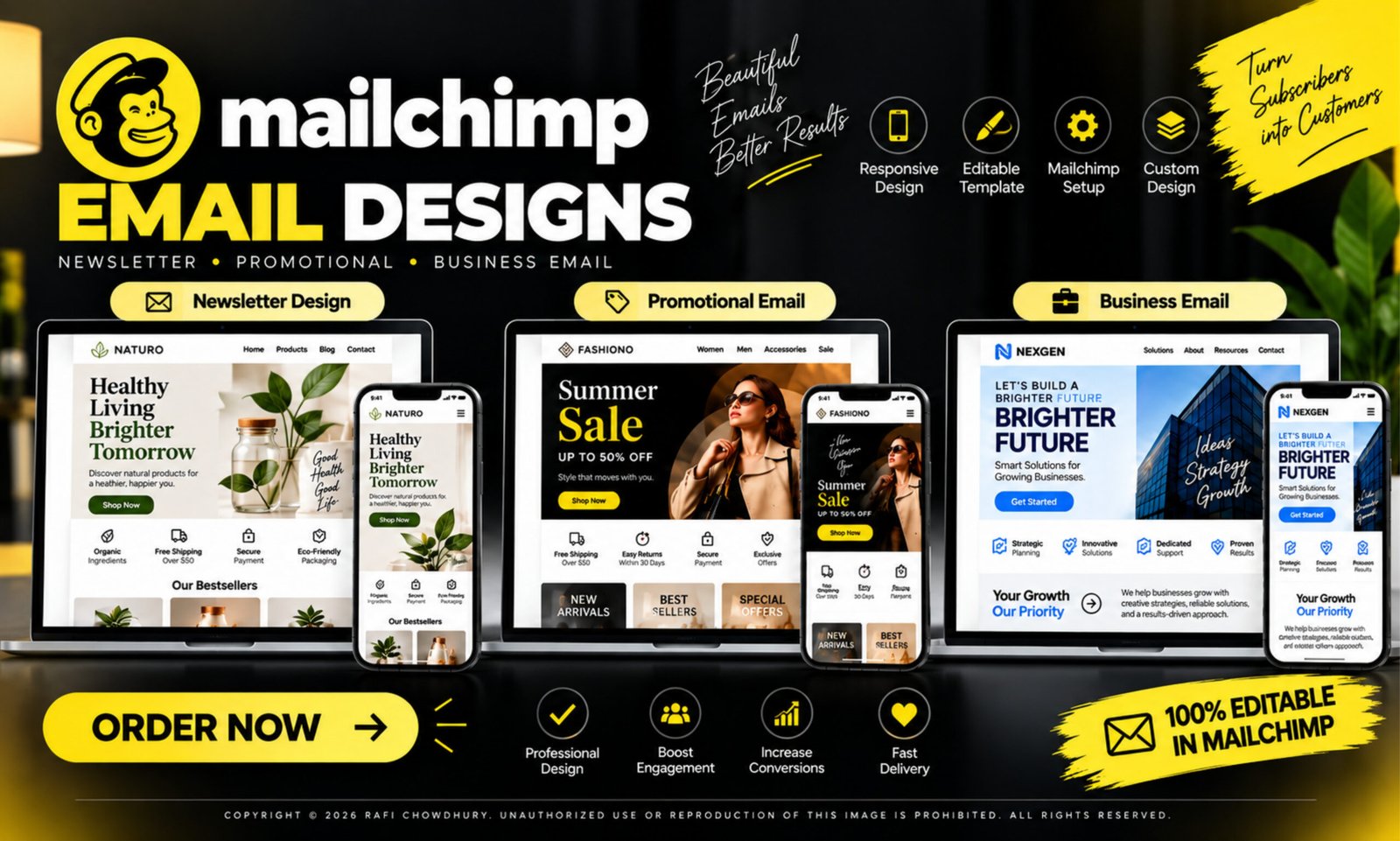
Importance of Email Marketing Design
Strong messaging is important, but email marketing design also influences how recipients experience a campaign.
Professional email design should make information easy to understand and guide readers toward the intended action.
Important design elements may include:
- Clear headline
- Brand consistency
- Readable typography
- Logical content structure
- Relevant images
- White space
- Mobile-friendly layout
- Clear call-to-action
- Appropriate buttons
- Consistent colors
An attractive email is not automatically an effective email. Design should support the message rather than distract from it.
Professional email marketing design combines visual presentation with usability and communication.
Why Mobile-Friendly Email Design Matters
Many people read emails on smartphones and other mobile devices.
An email that looks professional on a desktop but becomes difficult to read on a smaller screen can create a poor experience.
Responsive email design should consider text size, image dimensions, button placement, spacing, content width, and overall readability.
A clear mobile-friendly layout can make it easier for recipients to understand the message and take the desired action.
Importance of Email Newsletters
An email marketing newsletter can help businesses maintain regular communication with subscribers.
Newsletters do not always need to focus on direct selling. They can provide useful information that keeps the audience connected to the brand.
Newsletter content might include:
- Industry insights
- Company updates
- New blog posts
- Educational tips
- Product updates
- Case studies
- New services
- Special offers
- Upcoming events
- Useful resources
The goal is to give subscribers a reason to continue opening and reading future emails.
Consistent newsletters can help businesses stay visible without requiring every email to be a promotional message.
Mailchimp Email Marketing
Mailchimp is one of the well-known platforms businesses can use to manage email marketing activities.
Mailchimp email marketing can support tasks such as audience management, email creation, campaign scheduling, templates, automation, and performance reporting, depending on the features and plan being used.
Businesses may use Mailchimp for newsletters, promotional campaigns, customer communication, automated emails, and other marketing activities.
However, simply using an email marketing platform does not create an effective strategy automatically.
Businesses still need:
- Relevant audiences
- Strong subject lines
- Professional copy
- Quality email design
- Appropriate segmentation
- Clear calls-to-action
- Consistent testing
- Campaign analysis
The tool supports the process; the strategy determines how the tool is used.
Choosing an Email Marketing Platform
Businesses have access to different email marketing platforms, and the appropriate choice depends on their requirements.
When evaluating a platform, businesses may consider:
- Ease of use
- Email templates
- Automation
- Contact management
- Segmentation
- Analytics
- Integrations
- Deliverability tools
- Pricing
- Scalability
Mailchimp, HubSpot, Zoho Campaigns, and other platforms serve different types of businesses and workflows.
Instead of choosing a platform simply because it is popular, companies should evaluate whether its features match their marketing objectives.
Marketing Automation and Email
Marketing automation can help businesses send emails based on schedules, customer actions, lifecycle stages, or other defined triggers.
For example, a business might automatically send:
Subscription → Welcome Email → Educational Content → Product Information → Follow-Up
Automation can reduce repetitive manual work and create more consistent communication.
Other examples include abandoned-cart emails, onboarding sequences, event reminders, lead nurturing, customer follow-ups, and re-engagement campaigns.
Automation should still feel relevant to the recipient. Sending automated emails without appropriate targeting can create an impersonal experience.
What Is Cold Email?
A cold email is generally an email sent to a person or business with whom the sender does not already have an established relationship.
In B2B environments, cold email may be used for prospecting, partnerships, service outreach, sales development, or business introductions.
For example, a service provider may identify companies that match its ideal client profile, research appropriate decision-makers, and send personalized business outreach.
Effective cold emailing should not mean sending the same generic message to thousands of random addresses.
Targeting and relevance matter.
Importance of Cold Email Outreach
Cold email outreach can help businesses communicate directly with potential clients or decision-makers when used responsibly.
A professional outreach process might look like this:
Target → Research → Qualify → Find Decision-Maker → Verify Contact Information → Personalize → Send → Follow Up
This is significantly different from collecting random email addresses and sending mass messages.
A strong cold email should usually be concise, relevant, easy to understand, and focused on why the message may matter to the recipient.
Businesses should also follow applicable email, privacy, and anti-spam requirements in the jurisdictions involved.
Email Marketing vs Cold Email
Email marketing and cold email are related but not identical.
Traditional email marketing often communicates with people who have subscribed, purchased, registered, or otherwise established a relationship with a business.
Cold email typically involves reaching relevant prospects who do not yet have an established relationship with the sender.
For example:
Email Marketing: A company sends its monthly newsletter to subscribers.
Cold Email: A B2B service provider contacts a relevant decision-maker at a target company with a personalized introduction.
Both can support business growth, but the audience, strategy, messaging, compliance requirements, and objectives can differ.
Email Marketing and Inbound Marketing
Inbound marketing focuses on attracting potential customers through useful content and experiences.
This may include:
- SEO
- Blog content
- Social media
- Guides
- Resources
- Landing pages
- Lead magnets
- Webinars
Email can support inbound marketing after a visitor becomes a subscriber or lead.
For example:
Google Search → Blog → Newsletter Signup → Email Sequence → Service Page → Inquiry
In this situation, email helps nurture an audience that was initially attracted through another channel.
Email Marketing and Outbound Marketing
Outbound strategies proactively reach potential customers rather than waiting for them to discover the business.
Cold email can be part of an outbound sales or marketing strategy.
A B2B company might identify suitable organizations, research decision-makers, verify professional contact information, and conduct personalized outreach.
Combining inbound and outbound approaches can give businesses multiple ways to create opportunities rather than relying entirely on one acquisition channel.
Email Marketing Supports Lead Nurturing
Not every prospect is ready to make a purchase immediately.
Someone may discover a business today but need more information before making a decision.
Email marketing allows companies to continue communicating during that period.
A nurturing sequence may provide:
- Educational content
- Product information
- Case studies
- Testimonials
- FAQs
- Useful resources
- Relevant offers
The purpose is to help the prospect understand the business and its solution rather than forcing an immediate purchase.
Email Marketing Can Support Customer Retention
Email is not only useful for acquiring new customers.
Businesses can also communicate with existing customers through product updates, useful resources, service information, loyalty offers, renewal reminders, and other relevant messages.
Maintaining communication with existing customers can help businesses remain visible after the initial purchase.
This makes email relevant throughout the customer lifecycle rather than only at the beginning.
Personalization in Email Marketing
Generic emails may struggle to capture attention when recipients receive many messages every day.
Personalization can make communication more relevant.
Depending on available data and appropriate use, businesses may personalize emails based on:
- Name
- Company
- Industry
- Previous activity
- Customer interests
- Purchase history
- Location
- Lifecycle stage
- Relevant service
In B2B cold email, personalization might involve understanding the prospect’s company, role, industry, or a specific business need before contacting them.
The purpose is relevance—not simply inserting a first name into a generic template.
Email Segmentation
Segmentation involves dividing an email audience into smaller groups according to useful criteria.
For example, a business might separate:
New Subscribers | Existing Customers | Active Leads | Previous Customers | Different Interests
Each group may require different messaging.
A new subscriber may need introductory information, while an existing customer may be more interested in product updates or complementary services.
Segmentation can therefore help businesses create more focused campaigns.
Email Marketing Best Practices
Following appropriate email marketing best practices can improve the quality of campaigns and protect the audience experience.
Businesses should focus on:
- Building appropriate contact lists
- Creating relevant subject lines
- Writing clear email copy
- Using professional email design
- Segmenting audiences
- Optimizing for mobile devices
- Including clear calls-to-action
- Testing campaigns
- Monitoring performance
- Maintaining list hygiene
- Respecting unsubscribe requests
- Following applicable email marketing regulations
Businesses should avoid misleading subject lines, irrelevant mass emailing, purchased low-quality lists, and excessive frequency.
Long-term email marketing depends on trust.
Measuring Email Marketing Performance
Email marketing should be measured rather than managed entirely by assumptions.
Depending on the campaign and platform, businesses may evaluate metrics such as:
- Delivery rate
- Open rate
- Click-through rate
- Conversion rate
- Bounce rate
- Unsubscribe rate
- Replies
- Leads generated
- Sales generated
No single metric tells the entire story.
For example, a campaign may generate many opens but very few meaningful actions. Another campaign with a smaller audience may generate more qualified responses.
Metrics should therefore be interpreted according to campaign objectives.
Why Email List Quality Matters
A large email list does not automatically create a strong campaign.
Audience quality is often more important than raw list size.
A smaller list containing relevant, engaged contacts may be more valuable than a huge database containing outdated or irrelevant addresses.
For B2B outreach, data quality is particularly important.
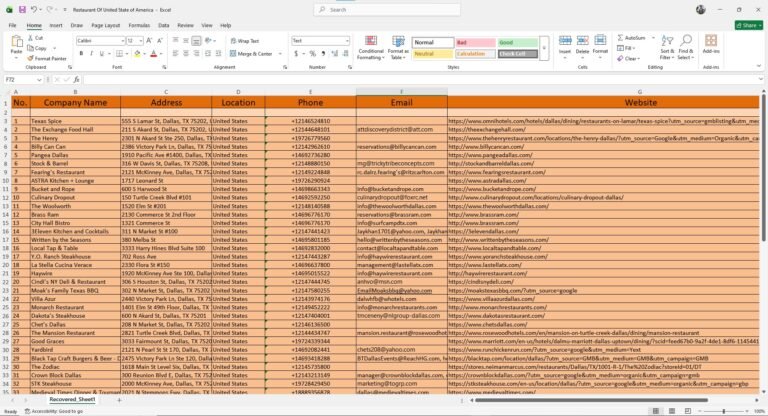
Useful prospect data can include:
- Company name
- Website
- Industry
- Location
- Decision-maker name
- Job title
- Professional email
- LinkedIn profile
- Verification status
Better targeting gives businesses a stronger foundation for personalized outreach.
Why Businesses Use Email Marketing Services
Managing email campaigns can involve strategy, copywriting, email design, audience management, segmentation, automation, testing, reporting, and ongoing optimization.
Some businesses therefore use an email marketing service or work with specialists to support specific parts of the process.
Services may include:
- Mailchimp email design
- Newsletter design
- Email campaign design
- Email templates
- Campaign setup
- Audience organization
- Email automation
- Cold email research
- B2B prospecting
- Email outreach support
The exact service required depends on the business and its internal resources.
Email Marketing for Small Businesses
Email marketing can be particularly useful for small businesses that want to maintain communication with customers without relying exclusively on paid advertising or social media.
A small business can build an email list through its website, customers, events, resources, and other appropriate channels.
It can then use that audience to share updates, educational information, new products, services, promotions, and useful content.
Consistency matters more than sending emails every day.
A smaller business can begin with a simple strategy and develop more advanced campaigns as its audience grows.
Common Email Marketing Mistakes
Even a powerful marketing channel can perform poorly when the strategy is weak.
Common mistakes include:
- Sending irrelevant emails
- Poor audience targeting
- Buying low-quality email lists
- Weak subject lines
- Overly promotional messaging
- Poor mobile design
- Too many calls-to-action
- No segmentation
- Sending too frequently
- Never testing campaigns
- Ignoring analytics
- Not maintaining email lists
- Making unsubscribing unnecessarily difficult
The objective should be useful communication rather than simply increasing send volume.
Email Marketing Demand on Fiverr and Upwork
The continued use of email by businesses has also created opportunities for freelancers offering email-related services on marketplaces such as Fiverr and Upwork.
Businesses can use these platforms to find professionals for services such as email marketing, Mailchimp email marketing, email marketing design, newsletter design, email campaign setup, email templates, marketing automation, B2B prospect research, and cold email outreach.
Clients may need help designing professional newsletters, creating branded email templates, setting up campaigns, organizing contact data, researching prospects, or supporting outreach workflows.
For freelancers, this creates opportunities to specialize in particular areas rather than offering every type of email service.
For example, one freelancer might specialize in Mailchimp email design, while another focuses on newsletter design, email campaign design, or B2B cold email research.
As discussed throughout the Importance of Email Marketing in 2026, businesses need more than a tool that can send emails. They need relevant audiences, professional communication, appropriate design, accurate data, and a clear strategy. Fiverr and Upwork can help connect businesses looking for these skills with freelancers who specialize in different parts of the email marketing process.
Frequently Asked Questions About Email Marketing
What is email marketing?
Email marketing is a digital marketing method businesses use to communicate with subscribers, customers, leads, and other appropriate audiences through email. It can include newsletters, promotions, educational content, product announcements, automated sequences, and other campaigns.
Why is email marketing important?
Email marketing provides businesses with a direct communication channel that can support lead nurturing, customer communication, promotions, retention, education, and sales activities.
What is an email campaign?
An email campaign is a planned email or sequence of emails designed around a specific marketing or communication objective, such as a product launch, newsletter, promotion, onboarding sequence, or customer re-engagement campaign.
What is Mailchimp email marketing?
Mailchimp email marketing involves using Mailchimp’s platform to manage audiences and create, send, automate, and analyze email campaigns according to the features available within the service.
What is cold email?
Cold email is outreach sent to a relevant person or business that does not already have an established relationship with the sender. It is commonly used in B2B prospecting, partnerships, and sales development.
What is cold email outreach?
Cold email outreach is a structured process of identifying suitable prospects, finding relevant decision-makers, researching and verifying contact information, creating personalized messages, sending outreach, and following up.
Is email marketing the same as cold email?
No. Email marketing commonly involves communication with subscribers or existing audiences, while cold email usually targets relevant prospects who do not yet have an established relationship with the sender.
Why is email design important?
Professional email design helps organize information, maintain brand consistency, improve readability, support mobile users, and make calls-to-action easier to understand.
Are email newsletters useful for businesses?
Newsletters can help businesses maintain communication with subscribers by sharing educational content, company updates, useful resources, new products, services, or relevant offers.
What makes a good email marketing strategy?
A strong strategy typically combines an appropriate audience, relevant messaging, professional design, segmentation, clear objectives, responsible list management, testing, measurement, and continuous improvement.
Final Thoughts
Email continues to provide businesses with a direct way to communicate with prospects, subscribers, and existing customers. From newsletters and automated campaigns to professional email design and targeted cold email outreach, different email strategies can support different stages of marketing and sales.
Successful email marketing is not simply about sending as many messages as possible. Businesses need relevant audiences, useful content, clear communication, professional design, appropriate targeting, and consistent analysis. Platforms such as Mailchimp and other email marketing tools can support the process, but the quality of the strategy remains essential.
Ultimately, the Importance of Email Marketing in 2026 comes from its ability to support direct communication throughout the customer journey. By combining professional email campaigns, newsletters, email marketing design, audience segmentation, automation, quality prospect data, and responsible outreach, businesses can build stronger relationships with their audiences and create more opportunities for sustainable growth.