

Importance of Digital Marketing in 2026: A Complete Guide
Importance of Digital Marketing in 2026: A Complete Guide
The way people discover businesses, compare products, research services, and make purchasing decisions has changed dramatically. Search engines, social media, email, websites, online advertising, influencers, and digital content now play important roles throughout the customer journey. For businesses, having an online presence is no longer simply about creating a website or opening social media accounts. It requires a coordinated strategy for reaching and communicating with the right audience.
This is one of the main reasons behind the growing Importance of Digital Marketing in 2026.
Digital marketing allows businesses to connect with potential customers through multiple online channels. From SEO marketing and social media marketing to email marketing, influencer marketing, content marketing, lead generation, and online advertising, each strategy can contribute to a different stage of business growth.
A successful digital marketing strategy is not about using every available channel. It is about understanding the target audience, choosing appropriate channels, creating valuable content, measuring performance, and continuously improving the strategy.
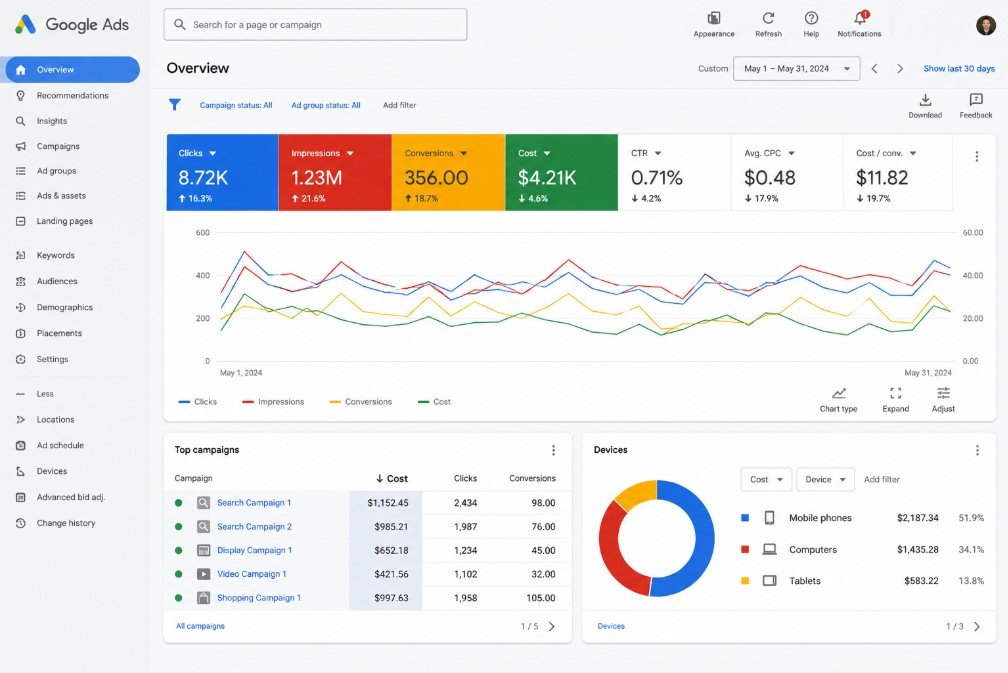
What Is Digital Marketing?
Digital marketing refers to marketing activities that use digital channels and technologies to promote businesses, products, services, and brands.
It can include:
- Search Engine Optimization (SEO)
- Social Media Marketing
- Email Marketing
- Content Marketing
- Google Ads
- Pay-Per-Click Advertising
- Influencer Marketing
- Lead Generation
- Video Marketing
- Website Marketing
- Online Advertising
- Marketing Automation
These channels can work individually, but businesses often achieve a more connected marketing system when several relevant strategies work together.
For example, SEO may bring someone to a website, useful content may educate that visitor, email marketing may continue the relationship, and a well-designed landing page may encourage an inquiry or purchase.
Why Is Digital Marketing Important?
The Importance of Digital Marketing in 2026 comes largely from how deeply digital channels are integrated into modern customer behavior.
People use search engines to research products and services. They discover brands through social media. They watch product demonstrations on video platforms, follow creators, subscribe to newsletters, compare businesses online, and visit websites before making decisions.
Businesses therefore need to be visible where their potential customers are spending time.
Digital marketing can support:
- Brand awareness
- Online visibility
- Website traffic
- Audience engagement
- Lead generation
- Customer acquisition
- Sales opportunities
- Customer communication
- Brand credibility
- Long-term business growth
However, simply being online does not guarantee results. Businesses need a clear strategy that connects marketing activities with actual business objectives.
Digital Marketing Helps Businesses Reach the Right Audience
Traditional marketing can sometimes communicate with broad audiences regardless of whether everyone is interested in the product.
Digital marketing provides businesses with more opportunities to focus their marketing efforts.
Depending on the channel, businesses can target or optimize around factors such as location, interests, search intent, demographics, professional roles, industries, customer behavior, and previous interactions.
For example, a local business may focus on people searching within its service area, while a B2B company may target decision-makers in specific industries.
Reaching a smaller but more relevant audience can often be more useful than reaching a large audience with little interest in the offer.
Importance of SEO Marketing
SEO marketing focuses on improving a website’s visibility in organic search results.
When people search Google or other search engines for information, products, or services, businesses want relevant pages from their websites to be discoverable.
SEO can involve:
- Keyword research
- Search intent analysis
- On-page SEO
- Helpful content
- Internal linking
- Technical SEO
- Website performance
- Backlinks
- Local SEO
- Content updates
For example, a business offering B2B lead generation services might create a dedicated service page and supporting educational content around relevant lead generation topics.
SEO is generally a long-term strategy rather than an instant source of traffic. Competition, website authority, content quality, technical performance, backlinks, and many other factors can influence search visibility.
The goal should be to create genuinely useful pages that match what users are searching for.
Importance of Social Media Marketing
Social media marketing allows businesses to communicate with audiences through platforms where people already spend time discovering and consuming content.
Depending on the target audience, businesses may use platforms such as Instagram, Facebook, LinkedIn, TikTok, YouTube, and others.
Social media can support:
- Brand awareness
- Audience engagement
- Content distribution
- Customer communication
- Community building
- Product discovery
- Website traffic
- Lead generation
The appropriate platform depends on the business.
A B2B company may focus heavily on LinkedIn, while a visual consumer brand may prioritize Instagram or TikTok. A company that relies on educational video content may find YouTube particularly useful.
A strong social media marketing strategy therefore begins with audience research rather than trying to be equally active on every platform.
Importance of Email Marketing
Email marketing provides businesses with a direct communication channel for subscribers, leads, customers, and other appropriate audiences.
Businesses can use email for:
- Newsletters
- Promotions
- Product announcements
- Lead nurturing
- Customer onboarding
- Educational content
- Follow-ups
- Re-engagement
- Customer retention
Unlike a social media post that may or may not appear in someone’s feed, email allows a business to communicate directly through the recipient’s inbox, subject to appropriate consent and applicable rules.
Email can also connect other digital marketing activities.
For example:
Website Visitor → Newsletter Subscription → Email Campaign → Service Page → Inquiry
This makes email an important part of many broader digital marketing systems.
Importance of Lead Generation
Marketing becomes more valuable when it helps create genuine business opportunities.
Lead generation is the process of attracting or identifying potential customers who may have an interest in a company’s products or services.
Lead generation can happen through:
- SEO
- Websites
- Landing pages
- Social media
- Email marketing
- Online advertising
- Content marketing
- Cold outreach
- Events
- Referrals
In B2B marketing, lead generation may also involve researching companies and identifying relevant decision-makers.
A professional process might look like:
Target → Find → Qualify → Contact → Follow Up → Convert
Quality matters significantly. Thousands of irrelevant contacts may be less useful than a smaller list of properly qualified prospects.
This is why lead generation should focus on relevance rather than simply collecting contact information.
Importance of Content Marketing
Content marketing involves creating useful content designed to educate, inform, engage, or help a target audience.
Content can include:
- Blog articles
- Guides
- Videos
- Infographics
- Case studies
- Social media posts
- Email newsletters
- Tutorials
- Reports
- Landing pages
Good content can support multiple areas of digital marketing.
A blog article can support SEO. The same topic can become social media content. Key information can be included in a newsletter. A useful guide may generate leads.
This makes content an important connection between different digital channels.
Businesses should focus on answering genuine customer questions rather than publishing content only to repeat keywords.
Importance of Influencer Marketing
Influencer marketing allows businesses to collaborate with creators who have established audiences on platforms such as Instagram, TikTok, and YouTube.
Influencers can help businesses introduce products and services through creator-led content.
Depending on the campaign, influencer marketing can support:
- Brand awareness
- Product discovery
- Social proof
- Content creation
- Audience engagement
- Promotions
- Product launches
Successful influencer marketing requires appropriate creator selection.
Follower count alone does not determine whether an influencer is suitable. Businesses should also evaluate niche, audience relevance, location, engagement, content quality, and brand compatibility.
Professional influencer research can help brands identify Instagram influencers, TikTok influencers, and YouTube influencers who match specific campaign requirements.
Importance of Google Ads and Online Advertising
Organic marketing strategies can be valuable, but businesses may also use paid advertising when they want additional reach or more immediate visibility.
Google Ads and other online advertising platforms allow businesses to promote products or services to selected audiences.
Paid campaigns can support:
- Website traffic
- Product sales
- Service inquiries
- Lead generation
- Brand awareness
- Remarketing
- Local promotion
However, spending money on advertising does not automatically create profitable results.
Businesses need appropriate targeting, strong ad copy, relevant landing pages, clear offers, conversion tracking, and ongoing campaign optimization.
Advertising should therefore be managed according to measurable business objectives rather than simply impressions or clicks.
Digital Marketing Supports Brand Awareness
Customers usually need to know that a business exists before they can consider purchasing from it.
Digital marketing provides multiple opportunities for brands to become visible.
Someone might first discover a company through Instagram, later find one of its blog articles through Google, visit its website, subscribe to an email list, and eventually make an inquiry.
This illustrates how multiple digital touchpoints can contribute to the customer journey.
Brand awareness therefore does not always come from one campaign or platform. It can develop through consistent communication across relevant channels.
Digital Marketing Can Be Measured
One important characteristic of digital marketing is the ability to collect performance data.
Depending on the channel and tools used, businesses may monitor metrics such as:
- Website traffic
- Search impressions
- Search rankings
- Clicks
- Engagement
- Leads
- Email opens
- Email clicks
- Conversion rates
- Advertising costs
- Sales
- Return on advertising spend
Businesses should avoid focusing only on vanity metrics.
For example, a social media post receiving thousands of views may create awareness, but if the objective is lead generation, businesses should also evaluate whether the campaign generates relevant inquiries.
Measurement should match the actual marketing objective.
Digital Marketing for Small Businesses
Digital marketing can give small businesses access to channels that were once much more difficult or expensive to use effectively.
A small company can create a professional website, optimize pages for search engines, publish useful content, build social media profiles, collect email subscribers, and run targeted advertising.
The business does not necessarily need to compete everywhere.
A focused strategy may be more practical.
For example:
Website + Local SEO + Google Business Profile + Social Media + Email Marketing
may be enough to create a strong digital foundation for certain local businesses.
The best combination depends on the audience, industry, competition, resources, and business goals.
What Does a Digital Marketing Agency Do?
A digital marketing agency helps businesses manage one or more areas of online marketing.
Depending on the agency, services may include:
- SEO
- Social media marketing
- Email marketing
- Paid advertising
- Content marketing
- Lead generation
- Website strategy
- Influencer marketing
- Analytics
- Marketing automation
Some businesses work with a full-service digital marketing company, while others hire specialists for individual services.
The appropriate choice depends on internal capabilities, budget, goals, and the complexity of the marketing strategy.
Businesses should evaluate providers based on relevant experience, communication, processes, deliverables, and fit rather than selecting only on price.
Freelance Digital Marketing
Freelance digital marketing provides another option for businesses that need specialized marketing support.
A freelance digital marketer may specialize in one service or combine several complementary skills.
For example, freelancers may provide:
- Lead generation
- SEO and keyword research
- Email marketing
- Social media management
- Google Ads
- Content strategy
- Influencer research
- Market research
Working with specialists can be useful when a business needs support for a specific project without hiring a full internal marketing team.
The scope, deliverables, communication process, timeline, and expected outcomes should be clearly defined before work begins.
Digital Marketing Agency vs Freelancer
Businesses sometimes need to decide whether to hire a digital marketing agency or an individual freelancer.
Neither option is automatically better for every situation.
An agency may provide access to a larger team covering multiple disciplines. A freelancer may provide more specialized or direct support for a particular service.
The decision can depend on:
- Project size
- Budget
- Required expertise
- Number of marketing channels
- Communication preferences
- Timeline
- Internal resources
Businesses should focus on finding the right expertise for their requirements.
Online Marketing Requires a Strong Website
A website often acts as the central destination for digital marketing activities.
SEO brings visitors to website pages. Social media can direct users to the site. Email campaigns link to landing pages. Online advertisements often send traffic to dedicated pages.
A professional website should therefore clearly communicate:
- What the business offers
- Who the service is for
- Why it is useful
- How visitors can learn more
- How potential customers can make contact
Website speed, mobile usability, navigation, content quality, security, and clear calls-to-action all contribute to the user experience.
Generating traffic is not enough if visitors cannot understand or use the website effectively.
How Different Digital Marketing Channels Work Together
Digital marketing becomes particularly powerful when relevant channels support each other.
Consider this example:
Google Search → SEO Blog → Service Page → Email Signup → Newsletter → Inquiry
Another journey could be:
Instagram → Website → Product Page → Email Follow-Up → Purchase
For B2B:
LinkedIn → Website → Case Study → Decision-Maker Outreach → Meeting
The customer journey is not always linear.
People may interact with a business several times across different platforms before taking action.
This is why businesses should think of digital marketing as a connected system rather than a collection of completely separate activities.
Digital Marketing Strategy
A professional digital marketing strategy should begin with business objectives.
Before choosing channels, businesses should understand:
- Target audience
- Products or services
- Customer problems
- Competitors
- Marketing budget
- Geographic market
- Business goals
- Existing digital presence
The next step is selecting appropriate channels.
For one business, SEO and content marketing may be priorities. Another may rely more heavily on social media and influencer marketing. A B2B service company may prioritize LinkedIn, lead generation, email outreach, and SEO.
There is no universal digital marketing strategy that works identically for every business.
Common Digital Marketing Mistakes
Businesses can invest significant time and money in digital marketing without achieving meaningful results if the strategy is poorly planned.
Common mistakes include:
- Trying to use every platform
- Targeting the wrong audience
- Publishing low-quality content
- Ignoring SEO
- Inconsistent branding
- Poor website experience
- Sending irrelevant emails
- Weak lead qualification
- Running ads without conversion tracking
- Ignoring analytics
- Expecting immediate SEO results
- Focusing only on followers or views
- Failing to follow up with leads
A strong strategy connects marketing activities with clear business goals.
How to Build a Digital Marketing Strategy
A basic process can follow these stages:
1. Define Goals
Decide whether the priority is awareness, traffic, leads, sales, customer retention, or another objective.
2. Understand the Audience
Research who the ideal customers are, what they need, and where they spend time online.
3. Research the Market
Analyze competitors, keywords, trends, customer behavior, and opportunities.
4. Select Marketing Channels
Choose the channels most relevant to the audience and objectives.
5. Create Useful Content
Develop content that answers questions, communicates value, and supports the customer journey.
6. Launch Campaigns
Implement SEO, social media, email, advertising, lead generation, or other selected strategies.
7. Measure Performance
Monitor meaningful metrics connected to business objectives.
8. Improve Continuously
Use performance data to improve targeting, content, campaigns, and customer experience.
Digital marketing is an ongoing process rather than a one-time setup.
Why Digital Marketing Skills Matter
As businesses continue using online channels, digital marketing skills remain useful across many industries.
Professionals may specialize in areas such as:
- SEO
- Social media
- Email marketing
- Content strategy
- Advertising
- Analytics
- Lead generation
- Influencer marketing
People interested in digital marketing learn through courses, practical projects, industry resources, experimentation, and real-world experience.
Because digital platforms and customer behavior continue to change, learning does not stop after mastering one tool.
Strong digital marketers continuously update their knowledge and adapt their strategies.
Importance of Fiverr and Upwork for Digital Marketing Services
Freelance marketplaces such as Fiverr and Upwork provide a connection between businesses that need digital marketing support and freelancers who specialize in different areas of online marketing.
Businesses can use these platforms to find professionals for digital marketing, SEO marketing, social media marketing, email marketing, lead generation, influencer research, Google Ads, content strategy, and other marketing services.
For